
What Increases Deck Cost the Most in South Jersey? A Structural Breakdown


If you’re pricing a new deck in South Jersey and wondering why two “similar-size” decks can come back with very different numbers, the answer is structural. Deck cost isn’t driven by square footage alone — it’s driven by what the deck has to do: span, support loads, pass inspections, handle stairs, and survive NJ’s freeze/thaw cycle.
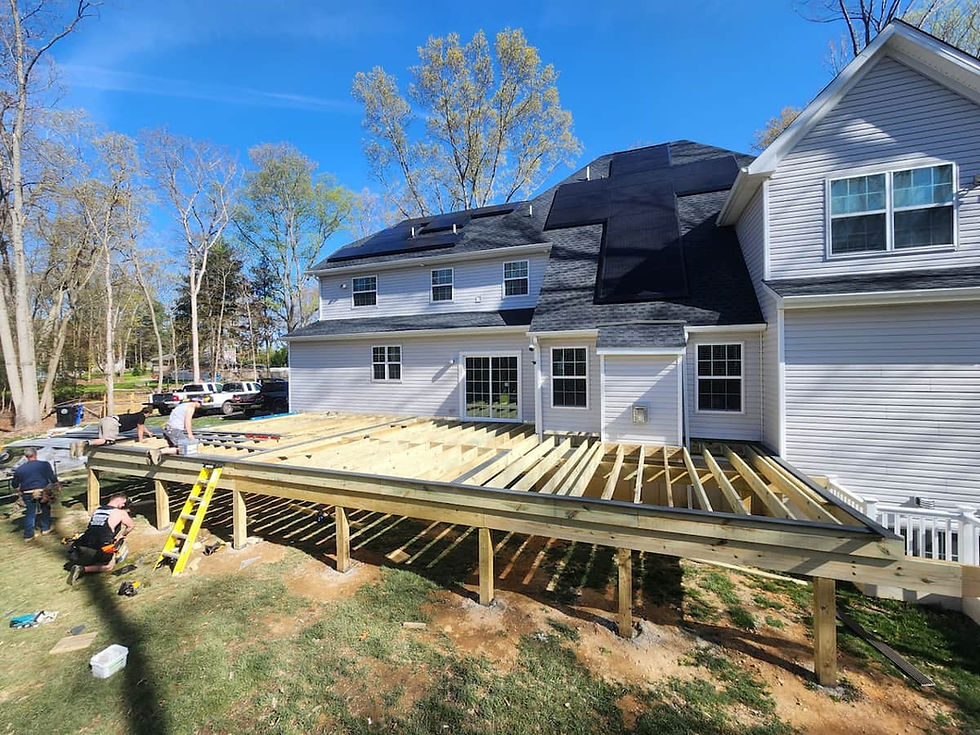
The biggest cost drivers are usually height (stairs + rail), framing complexity (beams/footings/spans), material choice, and access/site conditions. At C-JAM Construction, we build decks only — permit-compliant, structurally sound, and designed to last across Gloucester County, Camden County, and Salem County.
If you want a quick, honest breakdown for your property (before you waste time chasing unrealistic budgets), Schedule a Free Deck Consultation and we’ll walk through what’s driving cost on your build.
The 7 Biggest Deck Cost Drivers (Structural First)
1) Deck Height and Stairs
Height is one of the fastest ways to increase cost — because it multiplies everything:
More framing and bracing
Taller posts and potentially larger members
More rail footage
Longer and more complex stair systems
More labor and safety considerations
Rule of thumb: once a deck gets higher off grade, costs climb quickly due to stairs and guardrail.
If you want to see how code ties into rails and structural layout, this guide explains the basics: understanding South Jersey deck codes.
2) Footings and Soil Conditions
Footings are where “hidden cost” lives — because homeowners can’t see them when it’s done, but inspectors and long-term performance absolutely depend on them.
What can increase footing cost:
Poor soil bearing / inconsistent soil (common in parts of South Jersey)
More posts required due to spans or layout
Deeper excavation for frost protection
Difficult access for digging or concrete delivery
If you want the South Jersey-specific factors that affect footing work, start here: why South Jersey soil matters and NJ frost line requirements.
3) Beam and Joist Spans (Framing Complexity)
A deck that needs to span farther (or carry heavier loads) may require:
Larger beams
More beam lines
More posts/footings
Upgraded hardware and connectors
Stronger ledger attachment and flashing coordination
This is where the difference between “looks good” and “built right” shows up.
If you want to understand what separates a cheap deck from a structurally sound one, read: Why deck framing matters.
4) Railings (They Add Up Fast)
Railings are often one of the biggest line items — especially on elevated decks.
Cost is driven by:
Total linear footage
Railing type (pressure-treated vs composite vs aluminum)
Post layout and structural blocking
Gates (pool gates, child safety gates, etc.)
Stairs (more rail + more labor)
If your deck is elevated or has multiple stair runs, rail cost can be a major portion of the project.
5) Deck Shape, Angles, and “Custom Layout”
A simple rectangle is efficient. As soon as you add:
Wraparound sections
Multiple levels
Angled corners
Built-in benches
Picture framing
Curves or bump-outs
…you increase labor, framing complexity, and material waste.
If you’re in the “make it look custom” stage, use this as a companion read: Deck upgrades worth.
6) Material Selection (Composite vs Wood)
Material choice matters — but it’s not just the deck boards.
It affects:
Fastening systems
Trim and fascia requirements
Heat performance and comfort
Maintenance needs
Long-term durability
If you’re deciding between composites and traditional wood, start here: Trex vs wood and how long do composite decks really last.
7) Access, Demo, and Site Logistics
Two decks can be the same size and still price differently because of access.
Common “logistics” cost drivers:
Tight side yards
Landscaping that must be protected
Old deck demo and haul-away
Disposal costs
Uneven grade and drainage issues
In towns like Mullica Hill, Deptford, and Washington Township, we often see yards where access and grading play a bigger role than homeowners expect.
Permits and Approvals: Where They Affect Cost
Permits usually aren’t the biggest cost line item, but they can impact timeline and scope — which impacts labor scheduling.
If you want the process explained clearly: Deck permit guide.If you’re trying to avoid slowdowns: how to avoid permit delays.
A Simple Way to Budget Without Guessing
If you’re early in planning, here’s a homeowner-friendly approach:
Decide your “must haves” (size, height, stairs, rails)
Choose material direction (composite vs wood)
Identify the site constraints (access, demo, grade)
Get clarity on permits and township expectations
Price upgrades last (lighting, trim, benches)
For real-world numbers, this is the best baseline: 2026 pricing guide.
Mid-Article Next Step
If you want an accurate cost breakdown based on your deck height, layout, and site conditions — not a generic “per square foot” guess — Schedule a Free Deck Consultation.
We’ll help you understand what’s driving cost and where you can spend smarter without cutting structural corners.
Common Mistakes That Inflate Cost Later
Designing the deck first and asking “can we afford it?” after
Underestimating stairs/rails on elevated builds
Trying to reuse framing that shouldn’t be reused
Choosing upgrades before nailing down structure
Hiring a non-specialist and paying for fixes later
If you’re considering reusing an existing structure, read this before you commit: reusing deck framing. And if you want to see what fails most often, this is worth a look: Dangers of Old decks.
Bottom Line
The biggest deck cost increases usually come from height (stairs + rail), framing complexity (spans + beams + footings), rail systems, and site conditions — not just the deck boards. In South Jersey, soil and frost depth planning also play a major role in structural cost. If you want accurate budgeting, plan structure first, upgrades second, and keep everything permit-compliant from day one.
About C-JAM Construction
At C-JAM Construction, we specialize exclusively in decks — no general remodeling. We build permit-compliant, structurally sound decks across Gloucester County, Camden County, and Salem County with a clean, professional process.
We’re TrexPro Certified, and every completed project supports our Decks for CHOP initiative.
📞 609-302-0249
🧾 Service area overview: Service Areas
FAQ
Q: What increases deck cost the most in South Jersey?
A: Deck height (stairs and rail), footing requirements, framing spans, and site access typically have the biggest impact.
Q: Is composite decking always more expensive than wood?
A: Upfront, usually yes — but it can reduce long-term maintenance and replacement costs. Material selection should match your goals.
Q: Why do stairs and railings cost so much?
A: They’re labor-intensive, require precise layout, and add a lot of linear footage and hardware — especially on higher decks.
Q: Do permits add a lot to deck cost?
A: Usually more to timeline than cost, but incomplete permit packages can create delays and scheduling issues.
Q: Can I reuse my existing deck frame to save money?
A: Sometimes, but only if the framing is structurally sound and code-compliant. Many older frames don’t meet current standards.


Comments